

Recycle Your Mobile Phone The Right Way In Australia
That old phone tucked away in your drawer is more than just forgotten tech—it's a tiny vault packed with valuable resources. Deciding to recycle your mobile phone isn't just about decluttering. It's a surprisingly powerful action with real environmental and economic benefits, especially right here in Australia.
The Hidden Value in Your Old Device
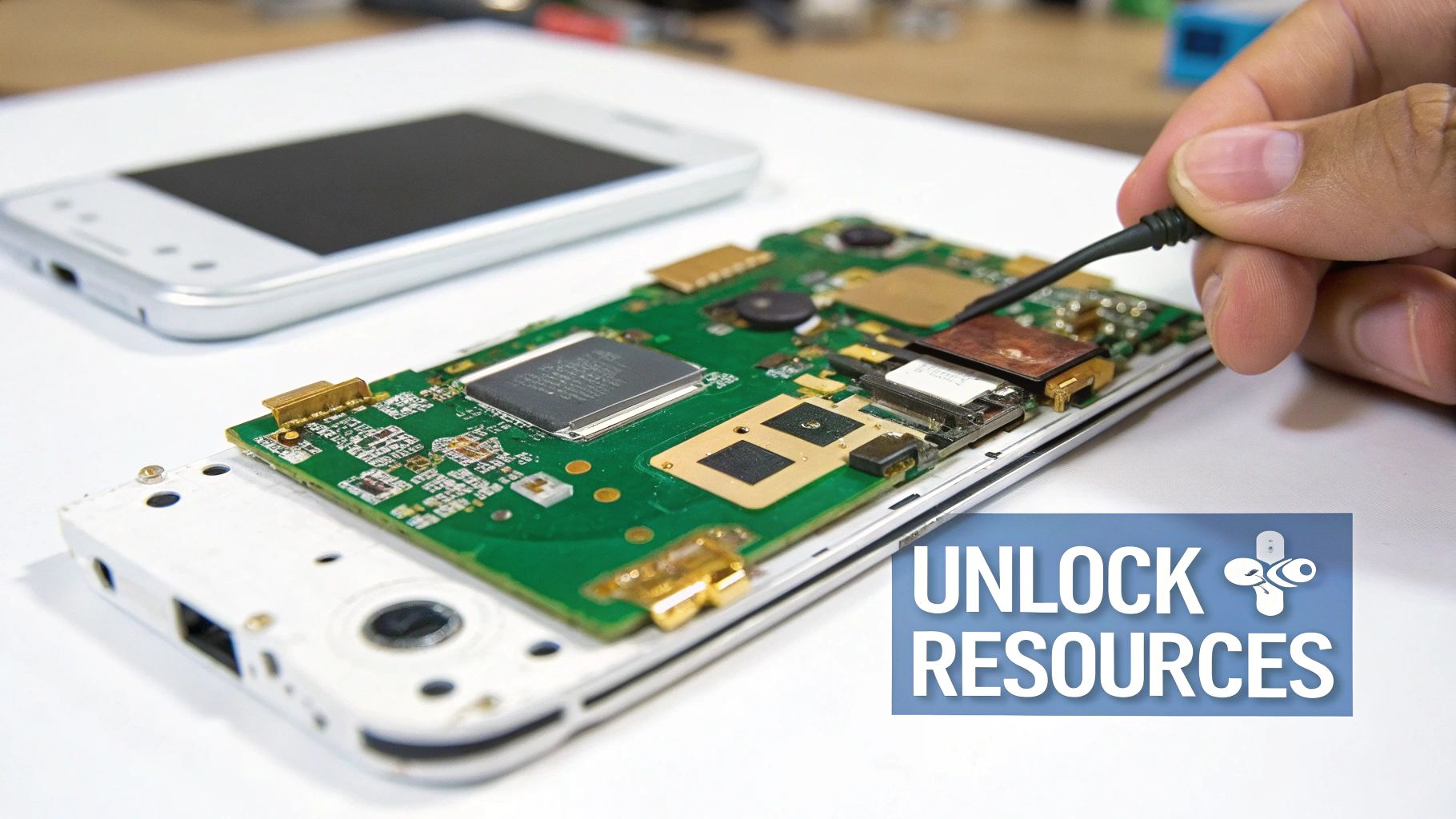
It’s easy to write off an old phone as useless, but that couldn't be further from the truth. Your device is loaded with precious materials that are in high demand across multiple industries. Think of it less as a single object and more as a compact collection of valuable elements.
When you choose to recycle, you're helping recover these materials so they can be used to make new products. This whole process is a cornerstone of the circular economy—a smart system designed to cut waste and keep resources in use for as long as possible, rather than just sending them to landfill.
What’s Really Inside Your Phone?
Every single smartphone contains small but significant amounts of valuable and reusable materials. Recovering them through recycling is far more efficient and less damaging to the environment than mining for new ones.
- Precious Metals: Tiny amounts of gold, silver, palladium, and platinum are used in your phone's circuitry. Recycling these metals directly reduces the huge environmental toll of mining.
- Essential Base Metals: Copper, used for wiring, and aluminium, often used for the casing, are highly recyclable and can be repurposed almost endlessly without losing quality.
- Plastics and Glass: Even these components can be melted down and reformed into new products, keeping them out of our overflowing landfills.
By recycling just one tonne of mobile phones, we can recover significant amounts of gold, silver, and copper. This prevents the need to mine and process tonnes of raw ore, which is a direct win for reducing carbon emissions and conserving our natural resources.
Australia's Growing E-Waste Problem
Unfortunately, not enough old phones end up where they should. Australia is facing a massive challenge with electronic waste (e-waste). An estimated 23 million unused mobile phones are sitting in homes and offices across the country, with a huge portion of old devices ending up in landfill instead of being recycled.
Most of us replace our phones every 18 to 24 months, yet our recycling rates for these devices are surprisingly low. You can discover more insights about Australia's e-waste challenge and see how a small action on your part can make a massive difference.
When you recycle your mobile phone, you’re doing so much more than clearing out a drawer. You're actively contributing to a smarter, more sustainable system that protects our environment and makes the most of the resources we’ve already got.
Securing Your Data Before You Let Go
Before your old phone starts its new journey, taking a few moments to secure your personal information is the most important step. Think of it like clearing out your personal belongings from a car before selling it; you wouldn't hand over the keys with your wallet still in the glove box.
Doing the digital equivalent is simple and gives you complete peace of mind.
First Things First: Back Up Your Digital Life
The first job is to save everything you want to keep. Your phone holds years of photos, contacts, messages, and memories that you don’t want to lose forever.
Creating a backup is your safety net, ensuring nothing important gets left behind when you wipe the device. Thankfully, both Apple and Android have straightforward, built-in cloud solutions that make this incredibly easy.
-
For iPhone users: Head to
Settings, tap on your name at the top, then go toiCloud>iCloud Backup. Make sure the toggle is on and tap “Back Up Now” to run a fresh backup over Wi-Fi. This saves everything from your photos to your app data. -
For Android users: Go to
Settings>Google>Backup. Ensure “Back up to Google One” is active and tap “Back up now.” This will sync your contacts, photos (via Google Photos), and device settings to your Google account.
Once your backup is complete and you've double-checked that your precious memories are safe, you can move on to the next critical step.
Wiping Your Phone Clean With a Factory Reset
A factory reset is the digital equivalent of a clean slate. It erases all your personal data, settings, and apps, returning the phone to the state it was in when it first came out of the box.
This is a non-negotiable step before you trade in or recycle your mobile phone.
Performing a factory reset is the single most effective way to protect your privacy. It ensures that the next owner can't access any of your accounts, photos, or personal files.
Just remember, this process is irreversible, which is why backing up your data first is so crucial. If you're looking for more detailed instructions on how to protect your personal data before selling your old phone, our full guide offers an in-depth look at the entire process.
Data wiping is a core part of digital security. To get a better handle on how this fits into the bigger picture, it’s worth reading about understanding the role of encryption in information security to see how these concepts are applied on a wider scale.
Your Pre-Recycling Checklist
To make sure you don't miss a thing, we've put together a quick checklist. Run through these actions before packaging up your old device.
| Action Item | Why It's Important | Quick Tip |
|---|---|---|
| Back Up All Data | Prevents losing photos, contacts, and memories. | Use your phone's built-in cloud service (iCloud or Google One) over Wi-Fi. |
| Sign Out of All Accounts | Disconnects the device from your iCloud/Google, Apple Pay, and other services. | This is especially critical for disabling 'Find My iPhone' before a reset. |
| Perform a Factory Reset | Completely erases all your personal information from the device. | Double-check that your backup is complete before you start, as this is irreversible. |
| Remove SIM Card | Your SIM connects your phone number and mobile plan to the device. | Use a paperclip or SIM tool to pop out the tray. Keep it for your new phone. |
| Remove Memory Card | If you have a microSD card, it contains personal files. | Pop it out and transfer the data to your computer or new device. |
Following these steps ensures your phone is a clean slate, ready for its next owner without any of your digital footprint left behind.
The Final Physical Checks
With the digital clean-up done, there are just a couple of physical items to take care of. People often overlook these, but they’re just as important for protecting your information.
- Remove Your SIM Card: Your SIM card is tied to your phone number and mobile plan. Use a SIM ejector tool (or a straightened paperclip) to pop it out and keep it safe for your next device.
- Take Out Your Memory Card: If your phone has a microSD card slot, make sure you remove the card. It likely contains photos, videos, or documents you’ll want to keep.
After completing these steps, your phone is officially and securely ready to be passed on. You've protected your private information and prepared the device for a smooth transition, whether it's heading for a trade-in or recycling.
Choosing The Best Recycling Path For You
Once you’ve wiped your phone clean and it’s ready for its next adventure, you have a few great options on the table. Figuring out what to do with your old device isn’t a one-size-fits-all thing; the best path really depends on your phone's age, its condition, and what you’re hoping to get out of it.
Let's break down the three main routes to help you choose wisely: trading it in for cash, donating it to a good cause, or recycling it for its raw materials.
Trade In and Get Paid
If your phone is still in decent shape and works well, trading it in is usually the smartest move. This option turns your old tech into either cash in your bank or store credit, putting real value back in your pocket. It’s the perfect choice if you're upgrading your gear, whether you’re a student needing a discount on a new laptop or just want some extra spending money.
Services like Trade.com.au make this incredibly simple. You can get an instant quote online, they’ll send you a free shipping label, and you get paid fast. This path is fantastic because it directly fuels the refurbished tech market, giving your old device a new lease on life with a new owner and supporting the circular economy.
Donate for a Good Cause
Sometimes, a phone might be too old to fetch much trade-in value, but it still works perfectly. In this scenario, donating it is a brilliant way to make a real difference in the community.
Many Australian charities accept old mobile phones to support their programs. These devices can be given to people in need, providing a vital lifeline to emergency services, family, or even job opportunities. Donating is a powerful choice if your priority is making a social impact over getting a financial return. It ensures your device continues to serve a meaningful purpose.
Recycle for the Planet
But what about the phones that are properly broken? We’re talking cracked screens, dead batteries, or devices that just won’t turn on. These phones might not be suitable for trade-in or donation, but they’re still packed with valuable resources that absolutely should be recovered.
This is where dedicated recycling programs shine. In Australia, the leading initiative is MobileMuster, a free and easy service with thousands of drop-off points all over the country. Instead of your broken phone ending up in landfill, it’s sent to accredited recyclers who safely dismantle it.
This option is the ultimate safety net for any device, no matter its condition. It guarantees that precious metals are recovered and any hazardous materials are disposed of responsibly, protecting our environment.
The MobileMuster program is incredibly effective, achieving a recycling rate of 98.6% in the 2023-2024 financial year. Since it started, the initiative has collected and recycled over 78 tonnes of mobile phones, which just goes to show the massive collective impact we can have. You can find all the details in the latest MobileMuster report.
This decision tree shows the first critical step of securing your data before you recycle your mobile phone, guiding you to back it up first if you haven't already.
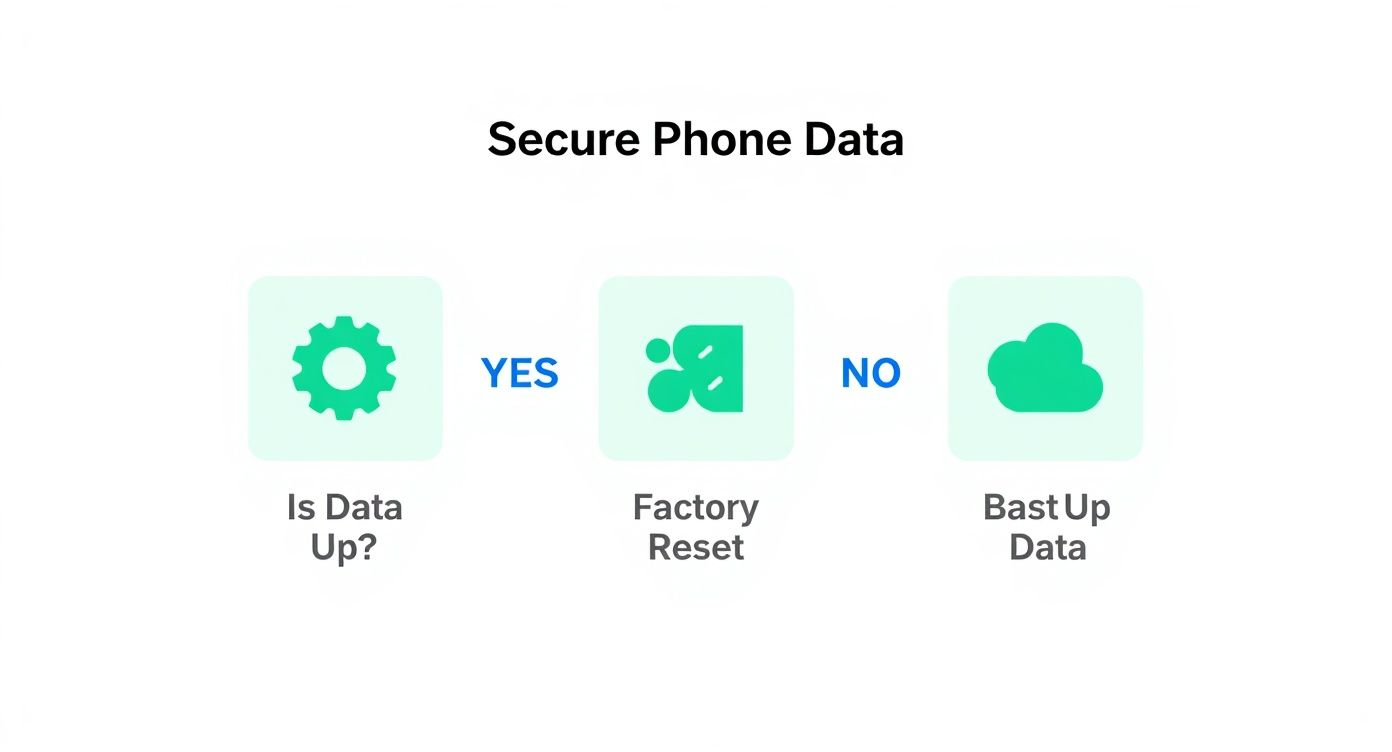
The visualisation highlights that whether you trade-in, donate, or recycle, securing your data through a backup and factory reset is the essential starting point for every path.
How To Trade In Your Old Phone For Cash
If getting some real value back for your old tech sounds like the best path, trading it in for cash is a fantastic option. Services like Trade.com.au have made the process incredibly straightforward and secure, turning that forgotten phone into money you can actually use.
Let’s walk through just how simple it is to sell your old phone online and get paid.
Getting Your Instant Quote
First things first, let's find out what your phone is worth. On a trade-in website, you’ll start by finding your device’s exact model. From there, you just need to answer a few simple questions about its condition.
Honesty is the key here—it’s how you get an accurate quote right from the start. Does the screen have any scratches? Does it power on and function correctly? Answering truthfully ensures the price you’re offered upfront matches what you’ll actually receive later. No surprises.
Nailing The Assessment
To give you a better idea of what to look for, here’s what those condition ratings usually mean. Think of it like describing a second-hand car; the little details really matter.
- As New: The phone looks flawless, with absolutely no visible signs of use. It works perfectly, as if it just came out of the box.
- Good: It might show minor signs of wear and tear, like light scuffs or faint scratches on the body or screen, but it's 100% functional.
- Fair: The device has visible cosmetic wear, such as deeper scratches or dents, but it still works without any issues.
Being upfront about a cracked screen or a battery that doesn't hold its charge helps the trade-in service give you a fair, no-surprises valuation. To get the most from your sale, it's wise to be aware of the common mistakes when selling vintage items, as the same principles of honest assessment definitely apply here.
Shipping Your Phone Securely
Once you accept the quote, you’ll get a free, prepaid shipping label sent straight to your email. That means you don’t pay a cent to send your device in. Now, it’s time to package it up safely for its journey.
You don't need anything fancy; a small, sturdy box will do the trick. The main goal is to stop it from rattling around and getting damaged in transit.
Pro Tip: I always wrap the phone in a layer of bubble wrap or place it snugly between crumpled paper inside the box. A secure package ensures it arrives in the exact same condition you sent it.
What To Avoid When Packing
- Don’t use a flimsy envelope. It offers next to no protection.
- Don’t leave it loose in a big box. It’s guaranteed to get knocked about.
- Don’t forget to include your details if required, like an order number. This is a common mistake that can delay your payment!
Verification And Fast Payment
After your phone arrives at the facility, trained technicians will give it a thorough check-up. They’ll verify its condition matches your description and, crucially, confirm that all your data has been securely wiped.
This verification process is usually quick. As soon as everything checks out, your payment is processed. With a service like Trade.com.au, you can expect the money to be sent straight to your bank account or PayPal, often within just a few business days. To learn more about how it works, check out our complete guide on how to trade in a phone for cash.
Understanding Australia's E-Waste Challenge
When you decide to recycle your old mobile, you're doing a lot more than just clearing out a junk drawer. You're taking a small but powerful step to tackle a massive national problem. It's easy to think one person's choice won't make a dent, but when it comes to electronic waste—or e-waste—every single device counts.
Australia has a surprisingly big part to play on the global stage. On average, each Australian generates about 20kg of e-waste every single year. To put that in perspective, it’s nearly triple the global average of just 7kg per person.
That figure puts Australia among the top contributors to a problem growing at a startling rate worldwide. And while our recycling efforts are getting better, we still have a long way to go. Currently, only about 54% of our e-waste is properly collected and recycled, meaning a huge amount ends up where it shouldn't. Read the full research about global e-waste trends to see how our local efforts fit into the bigger picture.
Embracing a Circular Economy
So, what’s the fix? The answer lies in shifting our thinking away from the old "take, make, and toss" model and towards what's known as a circular economy. Think of it as a smarter, more sustainable loop for our electronics.
Instead of constantly mining new materials to build a phone that gets thrown away after a couple of years, the circular economy is all about keeping products and materials in use for as long as humanly possible.
It works like this:
- Repair and Reuse: The best thing we can do is extend a device's life. Sometimes, all it needs is a simple repair or to be passed on to someone else who can still get value from it.
- Refurbish and Resell: When a phone is traded in, it can be professionally tested, repaired, and certified. This gives it a second life on the refurbished market, which is a huge win.
- Recycle and Recover: For devices that are genuinely at the end of the road, we can dismantle them and recover the precious materials inside—like gold, silver, and copper—to make brand new products.
This approach dramatically reduces the demand for new mining, cuts down on carbon emissions, and keeps toxic heavy metals out of our soil and water. Your decision to recycle your old phone is a direct contribution to this powerful system.
Your Role in a More Sustainable Australia
Choosing to recycle your mobile is a fantastic start. But there's another hugely impactful way you can support this movement: by choosing refurbished tech for your next upgrade.
When you buy a professionally refurbished device from a marketplace like Trade.com.au, you’re extending the life of a product that might have otherwise become e-waste. This simple choice helps reduce the massive environmental footprint that comes with manufacturing a brand-new device from scratch. For a deeper dive into the numbers, check out these essential mobile phone recycling facts and statistics in Australia.
Your Phone Recycling Questions Answered
Even with all the benefits laid out, you might still have a few questions. That’s completely normal. To help clear things up, here are some straightforward answers to the most common queries we get about phone recycling in Australia.
Is It Really Safe To Recycle My Old Phone?
Absolutely—but only if you take the right precautions first. Your data security is the top priority, and any reputable recycler will treat it just as seriously. The single most important thing you can do is perform a full factory reset before your phone leaves your hands.
Think of it like shredding sensitive documents before you put them in the recycling bin. It’s your first and best line of defence. For extra peace of mind, professional services like Trade.com.au and MobileMuster add their own layer of security, running secure data sanitisation processes to make sure your information is permanently wiped.
What Actually Happens To My Phone After I Recycle It?
Once your old phone is collected, it begins a pretty fascinating journey. The first step is sorting, where devices are separated based on their condition and model.
- Functional Phones: If a device still works well, it’s often professionally refurbished. It gets tested, repaired if needed, and certified before being sold on the second-hand market, which gives it a whole new lease on life.
- Broken or Old Phones: Any device that's beyond repair is carefully dismantled by hand. The batteries are removed for specialist recycling, and the rest of the components are shredded. These fragments are then sorted into their raw materials—plastics, glass, and valuable metals like copper and gold.
These recovered materials are then refined and sent off to be used in manufacturing new products, closing the loop in the circular economy.
Can I Also Recycle Phone Accessories Like Chargers And Cables?
Yes, you definitely can and should! Most phone recycling programs, especially the drop-off points set up by MobileMuster across Australia, are equipped to take accessories. This includes old chargers, worn-out cables, and even power banks.
It's always best to gather them all up and recycle them along with your handset. These items also contain valuable—and sometimes hazardous—materials, so keeping them out of your general waste bin is a huge help for the environment.
My phone is completely broken. Is it still worth recycling?
100% yes. Even a phone that’s been smashed to bits or won't turn on is a small treasure trove of recoverable materials. While it won't have any trade-in value, its internal components are still precious resources. Don't just toss it in the bin; taking it to a designated e-waste drop-off point ensures it’s dismantled properly and its materials are reclaimed.
Ready to give your old tech a new purpose and get paid for it? Visit Trade.com.au to get an instant quote on your device and explore our range of certified refurbished tech. Explore our verified devices today!