

How long can an iPhone last: A Simple Guide for Aussies
So, you’re wondering, "how long can an iPhone really last?" It’s a great question, and you’re probably looking for a straight answer. On average, a well-looked-after iPhone will serve you well for 4 to 7 years. Think of this less as a strict "use by" date and more as a flexible window that depends on a few key things.
Let's break down what that really means for you, in simple terms.
Unpacking Your iPhone's True Lifespan
That 4 to 7-year range isn’t just a number we pulled out of thin air. It’s a practical estimate based on how three crucial elements of the phone perform and age over time. Think of it like a three-legged stool—if one leg gets too short or breaks, the whole thing becomes wobbly and unreliable.
The same logic applies to your iPhone. Its useful life hangs on the health and balance of its core components. Understanding these factors is the first step to making a smart decision, whether you're trying to squeeze more life out of your current phone or eyeing up a cost-effective upgrade.
The Three Pillars of iPhone Longevity
So, what are these critical components? They’re the parts of your iPhone that wear down over time and ultimately signal when it might be time for a change.
- Battery Health: This is usually the first thing to show its age. A battery’s ability to hold a charge naturally fades with every charge cycle. After a couple of years, you'll probably notice you’re reaching for the charger a lot more often than you used to.
- Software Support: Apple is fantastic at providing regular iOS updates, which bring new features and, most importantly, critical security patches. An iPhone is really only considered viable as long as it can run the latest (or very recent) version of iOS.
- Physical Durability: Life happens. A dropped phone can lead to a cracked screen, a worn-out charging port can stop working, and water damage can spell the end, even if everything else is still in perfect shape.
A device’s practical lifespan isn't just about whether it turns on. It’s about whether it can reliably do what you need it to every single day, from running your essential apps to keeping your personal data secure.
By keeping these three pillars in mind, you can get a much clearer picture of how much life is left in your phone. It also shines a light on why a professionally checked and certified refurbished iPhone from a trusted marketplace like Trade.com.au is such a brilliant move. These devices are verified to have healthy batteries and are recent enough to get years of software updates, offering fantastic value well within that 4-to-7-year sweet spot.
The Battery: The Heartbeat of Your iPhone
If there's one part of your iPhone that truly dictates its practical lifespan, it’s the battery. Think of it like the engine in a car—the chassis and paint might look fantastic for years, but it’s the engine's health that determines how reliably it gets you from A to B.
With every charge and discharge, the battery chemistry slowly wears down. It's this gradual decline that makes a two-year-old iPhone feel sluggish or struggle to make it through the day without a top-up. The phone isn't broken; its "fuel tank" has just naturally shrunk over time. Understanding this is the key to knowing how much life your iPhone really has left.
What Is a Charge Cycle, Anyway?
When we talk about battery ageing, time isn't the most important factor—usage is. The best way to measure this is with charge cycles. But a charge cycle isn't just plugging your phone in and unplugging it.
One complete charge cycle is counted when you’ve used 100% of your battery’s capacity. For instance, if you use 60% of your battery today, recharge it fully overnight, and then use another 40% tomorrow, that adds up to one full cycle (60% + 40%). It’s a far more accurate way to measure wear and tear than simply counting the months you’ve owned the phone.
An iPhone's battery is a consumable part. It's designed to hold a certain amount of its original capacity after a specific number of charge cycles. Crossing this threshold doesn't mean the battery will die, but you'll definitely notice a big drop in how long it lasts.
Apple’s batteries are built to last. According to their own data, batteries in iPhone 14 models and earlier should retain 80% of their original capacity after 500 complete charge cycles. For the iPhone 15 and later, they've pushed that to an incredible 1000 cycles before hitting that same 80% mark.
How Australia's Climate Affects Your Battery
That mention of heat isn't just a minor detail—it's a massive factor for anyone using a phone in Australia. Lithium-ion batteries, like the ones in your iPhone, absolutely hate extreme temperatures.
Leaving your phone on the car dashboard on a summer day in Adelaide or using it in direct sun at a Sydney beach can permanently damage its ability to hold a charge. The ideal operating temperature for an iPhone is between 0° and 35° Celsius. Consistently pushing it above that range will cause irreversible harm to its long-term health.
Checking Your iPhone's Battery Health
Thankfully, Apple makes it incredibly easy to check up on your battery's condition. You don’t have to guess; the data is right there in your Settings.
Here's how to find it:
- Open the Settings app.
- Scroll down and tap on Battery.
- Select Battery Health & Charging.
You’ll see a "Maximum Capacity" percentage. This number shows your battery’s current capacity compared to when it was brand new. A fresh-out-of-the-box iPhone will show 100%. If yours says 85%, it means it can only hold 85% of the charge it could when it was new.
Apple generally considers a battery "consumed" once its capacity drops below 80%. At this point, you'll probably experience noticeable issues, like the phone shutting down unexpectedly or just not making it through the day. This is also when performance throttling might kick in to prevent those sudden shutdowns, which can make your phone feel slower.
For a deeper dive into what these numbers mean, check out our guide on understanding your iPhone's battery health.
Software Support: The Brains Behind Your Device
An iPhone's physical parts only tell half the story. The real brains of the operation—the software—is what keeps your phone smart, secure, and genuinely useful year after year. Think of it like this: the hardware is your iPhone’s body, but the iOS software is its mind. Without a healthy, updated mind, the body can't learn new tricks or protect itself from threats.
This commitment to software support is a massive reason why iPhones hold their value so well. Apple leads the industry here, offering major iOS updates for its devices long after many other brands have called it quits. It means even an older iPhone can feel fresh and, more importantly, stay safe from the latest digital dangers.
Apple's Impressive Software Lifespan
Apple has a history of providing major iOS updates for a surprisingly long time. Most iPhones get full software support for six to eight years after they first hit the shelves.
Take the iPhone 8, for example. It came out in 2017 but was still supported by iOS 16, which was released in 2022. That’s five solid years of major feature updates and security patches, with crucial security support often extending even longer.
This long-term support is a game-changer when you're asking, "how long can an iPhone last?" It’s a guarantee that your device won’t be left in the dust, ensuring it can run the latest apps and connect to the internet securely for years to come. For students in Australia needing reliable access to uni portals or small business owners managing their finances on the go, this security isn't just a nice-to-have; it's essential.
What Happens When The Updates Stop?
When an iPhone no longer gets major iOS updates, it doesn’t just power down for good. It’ll keep working for basic things like calls, texts, and browsing. But from that point on, it enters a slow decline where its usefulness and security start to fade.
This is a critical turning point. Without the latest security patches, your device becomes much more vulnerable to malware and viruses. It's a bit like owning a house and suddenly deciding to stop locking the doors—it might be fine for a while, but the risk of a break-in goes up dramatically.
The end of software updates is the true beginning of the end for an iPhone's practical life. It’s no longer just about a weaker battery; it’s about the device becoming a potential security risk and losing compatibility with the apps you rely on every day.
On top of that, app developers eventually stop supporting older iOS versions. Over time, you’ll find you can't update or even download essential apps, whether it's your banking app, social media, or work tools. This is often the final nudge that tells you it’s time to think about an upgrade.
This is also where hardware improvements in newer models really shine. They're built from the ground up to support a much longer software lifecycle.
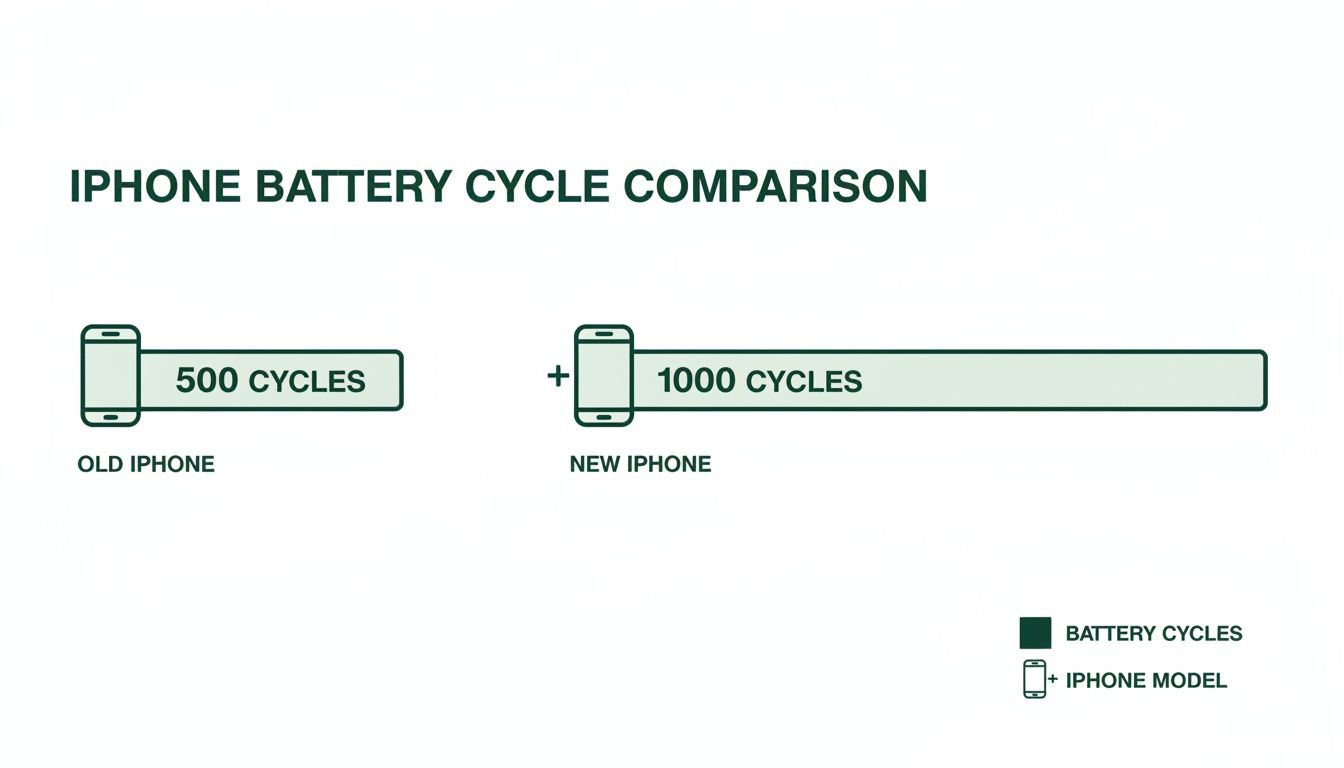
The leap from 500 to 1,000 charge cycles in the latest models isn’t just a battery boost; it's a clear signal from Apple that the hardware is built to last through many more years of software updates.
The Refurbished Advantage
This is where buying a certified refurbished iPhone from a trusted Aussie seller like Trade.com.au makes so much sense. A refurbished iPhone 13 or 14, for instance, has years of guaranteed software updates still ahead of it.
You get a device that’s not only in great physical shape with a healthy battery but also has a long and secure future—all for a much friendlier price. It’s the smartest way to get maximum value and longevity from your purchase.
Built Tough: Understanding Physical Durability
While the battery is the engine and the software is the brains, an iPhone’s body—its physical shell—is what protects everything from the chaos of daily life. A phone can have a perfect battery and the latest iOS, but none of that matters if a single drop shatters the screen.
Understanding your iPhone's physical resilience is a huge part of answering the question, "how long can an iPhone last?"
Thankfully, iPhones have become dramatically tougher over the years. Early models were notoriously fragile, but modern devices are engineered to withstand much more punishment. Apple has made huge strides in durability that directly impact how long your phone can stay in your pocket and out of the repair shop.
The Evolution of iPhone Durability
The journey from the first iPhone to today's models is a story of constant improvement in materials and design. It’s not just about looking sleek; it's about surviving real-world accidents.
Key upgrades you'll find in recent models include:
- Ceramic Shield: Introduced with the iPhone 12, this front glass is infused with nano-ceramic crystals. This makes it significantly more resistant to shattering from drops than older iPhones. It’s a genuine game-changer for screen longevity.
- IP Ratings: Modern iPhones come with an IP (Ingress Protection) rating, like IP68. This means they can survive being submerged in water for a limited time—offering peace of mind against accidental spills, rain, or a dreaded drop into the sink.
- Stronger Frames: The use of materials like aerospace-grade aluminium and surgical-grade stainless steel makes the phone's frame more rigid and less prone to bending or damage from impacts.
Physical durability isn't just about surviving a catastrophic drop. It's about resisting the small, cumulative damage of everyday life—the scratches, scuffs, and minor bumps that can wear a device down over time.
These advancements mean that a newer iPhone, even a refurbished one, is inherently built to last longer than its older counterparts. It’s a crucial factor that adds years of potential use to your device.
Common Threats and Simple Fixes
Despite these improvements, no phone is indestructible. Gravity, carelessness, and simple wear and tear are still the biggest enemies of your iPhone's physical health. A few common issues can cut its life short.
The most frequent culprits include:
- Cracked Screens: The number one physical ailment for any smartphone.
- Charging Port Damage: Lint, dust, and repeated plugging can wear out the port over time.
- Water Damage: Even with IP ratings, prolonged exposure or high-pressure water can cause issues.
- Button Failure: The side buttons can wear out after thousands of clicks.
The good news is that most of these threats can be neutralised with a couple of small, affordable investments. A high-quality screen protector and a durable case are the single best things you can do to extend your iPhone's physical life, protecting it from 90% of common accidents.
Your Repair Options in Australia
If the worst happens, a repair doesn't have to break the bank. In Australia, you have several options, from official Apple services to trusted third-party repair shops.
For those who are more hands-on, you can even explore options like Apple’s Self Service Repair program for certain issues. Getting a screen or port fixed is often far cheaper than buying a new phone, breathing new life into a device you thought was finished.
This is especially true for certified refurbished devices from Trade.com.au, where the cost-effective nature of the phone makes a minor repair a very smart financial decision.
When to Upgrade: Recognising the Telltale Signs
Knowing your iPhone is getting old is one thing, but how do you know when it’s truly reached the end of its useful life? It’s rarely a single big failure. Instead, it’s that slow creep of small annoyances that eventually makes your phone a source of frustration instead of a reliable tool.
You don’t need to be a tech guru to spot the signs. It’s about noticing when your device starts fighting you on everyday tasks. These are the classic symptoms that tell you it might be time for a change.
The Most Common Warning Signs
If your phone starts showing a few of these signs at once, it's a clear signal its best days are over. Think of it as your iPhone’s way of saying it's getting tired and just can't keep up with your needs anymore.
- The Battery Dies Before Lunchtime: This is the big one. If you’re constantly hunting for a charger or a power bank just to get through a trip to the shops, the battery's health is shot. It’s no longer an inconvenience; it’s a reliability problem.
- Constant App Crashes: When your go-to apps—maps, banking, social media—start freezing or closing for no reason, it usually means the hardware is struggling to handle modern software.
- Performance Becomes Painfully Slow: We're not talking about a little lag here and there. This is when opening the camera takes forever, your typing is way ahead of the letters appearing on screen, and the phone feels sluggish doing the simplest things.
- You Can't Install Important Updates: Once you’re locked out of the latest major iOS updates, your phone is officially a security risk. You’ll also miss out on new app features. This is a critical sign that your device has been left behind by the software ecosystem.
Turning an Old Phone Into a Smart Upgrade
Seeing these signs doesn’t mean your old iPhone is worthless. Quite the opposite—it’s an asset waiting to be traded in. Even a device that’s seen better days still has value, and you can turn that into a savvy financial move toward your next phone.
An old iPhone isn't just e-waste; it's a credit towards a better, more reliable device. By trading it in, you're not only saving money but also making an environmentally responsible choice.
This is exactly where a service like the Trade.com.au trade-in program comes in. It’s a simple, eco-friendly way to get credit for your old device, which makes grabbing a high-quality, certified refurbished model even more affordable.
Let’s be real: a well-looked-after iPhone holds its value surprisingly well. For students or young professionals trading up, getting a refurbished premium model with 85-90% battery health is an unbeatable value proposition. It’ll power your hustle for another 2-4 years while saving you hundreds compared to the $1399+ price tag on new models. Learn more about getting the best value for your device from this iPhone buyer's guide.
The Smart Move: Why a Refurbished iPhone is Unbeatable Value
So, we’ve covered all the big things that determine how long an iPhone really lasts—from its battery cycles to those all-important software updates. The big question is, what’s the smartest way to get a device that ticks all these boxes without paying that eye-watering premium price?
For thousands of savvy Aussies, the answer is a certified refurbished iPhone.
This isn’t just about grabbing a "second-hand" phone from a random online marketplace. A properly certified refurbished device is the perfect sweet spot between longevity, performance, and price. You're getting an experience that’s practically new, but for a fraction of the cost. Honestly, it’s the most logical choice for anyone looking for maximum value.
Peace of Mind with the Trade.com.au Difference
It’s completely understandable to feel a bit hesitant about pre-owned tech. You might be worried about getting stuck with a dodgy battery or some hidden fault that doesn't show up for a few weeks. That’s precisely why a trusted, professional certification process is so critical. It turns a risky gamble into a reliable, guaranteed investment.
Here at Trade.com.au, every single device goes through a meticulous, multi-point inspection. Our expert technicians test everything from the battery health and camera function to the responsiveness of every single button. This is how we ensure the iPhone you receive meets the same functional standards as a brand-new one.
Think of it this way: buying a random used phone is like buying a car without a service history. Buying a certified refurbished iPhone from Trade.com.au is like getting a certified pre-owned car—it’s been professionally inspected, serviced, and comes with a guarantee.
We stand behind our work, which is why every device we sell comes with a 12-month warranty. This gives you complete peace of mind, knowing your purchase is protected against any functional issues. No guesswork, no stress.
Connecting the Dots for Unbeatable Value
Let’s pull everything we've talked about together. A refurbished iPhone 13 from our store with 89% battery health is a perfect real-world example of what we mean by smart value.
Here's what you're actually getting:
- A Healthy Battery: That 89% capacity means it still has hundreds of charge cycles left in the tank, promising you solid, all-day performance for a long time to come.
- Years of Software Updates: The iPhone 13 is modern hardware. It’s set to receive crucial iOS updates for at least another four to five years, keeping it secure and compatible with all your favourite apps.
- Proven Durability: It was built tough from the start, featuring Ceramic Shield glass and an excellent IP rating for water resistance. It’s a reliable device built for daily life.
This combination offers years of dependable performance for a fraction of what a brand-new device would cost. It’s a practical, cost-effective solution for savvy Australians everywhere.
Whether you're a student in Melbourne needing a reliable device for uni, a small business owner in Brisbane looking to upgrade your team affordably, or simply someone who wants premium tech without the premium price tag, a certified refurbished iPhone is the smartest move. If you're looking for more guidance, you can explore our list of the best refurbished iPhones available in Australia to find the perfect model for your needs.
Frequently Asked Questions
Still have a few questions buzzing around about how long an iPhone really lasts? You’re not the only one. Here are some quick, straightforward answers to the queries we get all the time.
Is It Worth Replacing an Old iPhone's Battery?
Absolutely. If your iPhone is still getting iOS updates and the screen isn't smashed to pieces, a battery replacement is easily the best bang-for-your-buck upgrade you can make.
It can completely rejuvenate a device that feels slow and tired, often giving you another one to two years of solid performance. It’s a small investment for a huge return.
Which Refurbished iPhone Is the Best Value in Australia?
The sweet spot for value is almost always a model that’s two or three generations behind whatever Apple just released. Right now, that means a refurbished iPhone 13 or 14 is a brilliant choice.
You’re getting modern features like 5G, a fantastic camera, and the guarantee of several more years of software support. These models deliver that premium Apple experience without the eye-watering price tag, making them a top pick for smart buyers on Trade.com.au. For more general insights into common tech issues that can impact device longevity and maintenance, you might explore these frequently asked questions.
How Does the Trade.com.au Warranty Work?
Our 12-month warranty is there to give you the same peace of mind you’d get buying a brand-new phone. It covers any functional hardware issues that aren’t caused by accidental damage or misuse.
What that means in plain English is if the camera stops working, a button gets stuck, or the battery dies unexpectedly within a year, we’ll repair it or replace it. It’s our promise to you that your device meets our high standards and your investment is safe.
Ready to find a device that lasts without breaking the bank? Explore the latest range of certified refurbished iPhones at Trade.com.au and enjoy premium tech with a full 12-month warranty.