

iPhone Repair Cost in Australia: A Complete Guide
That gut-wrenching moment your iPhone meets the pavement is usually followed by one, very stressful question: how much is this going to set me back? An iPhone repair in Australia can cost anywhere from under $100 for a simple battery swap on an older model to over $600 for a new screen on the latest iPhone Pro. What you’ll actually pay comes down to your specific model and the extent of the damage.
Understanding Your iPhone Repair Cost in Australia
When your trusty iPhone takes a tumble or the battery just can’t hold a charge anymore, the thought of a repair bill can be pretty daunting. It’s easy to feel caught between a potentially expensive fix and the even higher cost of a brand-new phone.
The good news? Getting a clear idea of the potential costs upfront makes the whole decision a lot less stressful. Think of it as a quick financial snapshot—a realistic look at what you can expect to pay before you even step into a shop. This guide is here to demystify the world of iPhone repair costs across Australia so you can budget properly and figure out if a repair is the right move for you.
What This Guide Covers
To give you the full picture, we need to look at what actually goes into the final bill. The main things that will influence the price are:
- The Type of Damage: A cracked screen is a different beast to a worn-out battery. Water damage? That can be the most unpredictable of all.
- Your iPhone Model: It makes sense that fixing the advanced screen on an iPhone 15 Pro Max will cost more than repairing an older iPhone 11. Parts are just different.
- Where You Get It Fixed: You’ll see pretty big price differences between an official Apple Store, an authorised service provider, and your local independent repair shop.
We've put together a handy table below with estimated cost ranges for the most common repairs. It's a great starting point to get a feel for what you might be up for, depending on your iPhone. It’s the first step to making a smart choice for your phone and your wallet.
Getting a clear handle on repair costs lets you weigh up your options without the panic. Sometimes, a straightforward repair is a no-brainer. Other times, a high quote might be the perfect signal that it’s time to look at upgrading to a quality refurbished model instead.
Breaking Down Common iPhone Repairs and Their Prices
When your iPhone takes a tumble, the first thought that usually crosses your mind is, "How much is this going to cost me?" The final number on your repair quote isn't just pulled out of thin air; it depends entirely on what’s actually gone wrong inside that sleek metal and glass body.
Not all repairs are created equal. A simple battery swap is worlds apart from a complex logic board repair. Let's walk through the most common issues that bring iPhones into repair shops across Australia. Understanding these will help you see why the iPhone repair cost can swing so dramatically. Think of it like a car—replacing a tyre is a routine job, but fixing a gearbox requires a specialist's touch and much pricier parts.
The Most Common Culprit: The Cracked Screen
A shattered screen is easily the number one reason an iPhone needs a bit of TLC. And it's more than just an eyesore; a cracked screen compromises the phone's seals, leaving the sensitive electronics inside vulnerable to dust and moisture. That can quickly turn a small problem into a much bigger one.
The cost to fix it isn't a one-size-fits-all price. The single biggest factor is your iPhone model. An older iPhone 8, for instance, uses a straightforward LCD screen, which makes the replacement relatively affordable. On the other hand, a new iPhone 15 Pro Max boasts a sophisticated OLED display with ProMotion technology and integrated Face ID sensors. This high-tech component is far more expensive to produce and, you guessed it, to replace.
An iPhone screen isn't just a piece of glass. It’s a complex assembly of display technology, touch sensors, and often, biometric scanners. The more advanced the screen, the higher the repair cost.
As a general rule, the price of repairs has crept up alongside the cost of new phones. Local repair guides show that fixing an entry-level iPhone SE screen might cost between $110 to $290. But for a top-of-the-line iPhone 15 Pro Max, that same repair can soar to $690. You can discover more insights about these repair costs from local experts who keep a close eye on these price trends.
The Dwindling Battery
Is your iPhone calling it a day long before you do? Battery degradation is a natural part of any smartphone's life. Over time, the lithium-ion battery just can't hold as much charge, leading to those frustratingly short usage times and unexpected shutdowns. The good news? A battery replacement is one of the most cost-effective repairs you can get.
It’s a quick and affordable fix that can breathe new life into a phone that’s otherwise working perfectly. For a small investment, you can often get another year or two out of your device, which is a much smarter financial move than splashing out on a brand-new phone.
This chart gives you a quick visual on how the costs for common repairs stack up, with screen damage usually being the biggest expense.
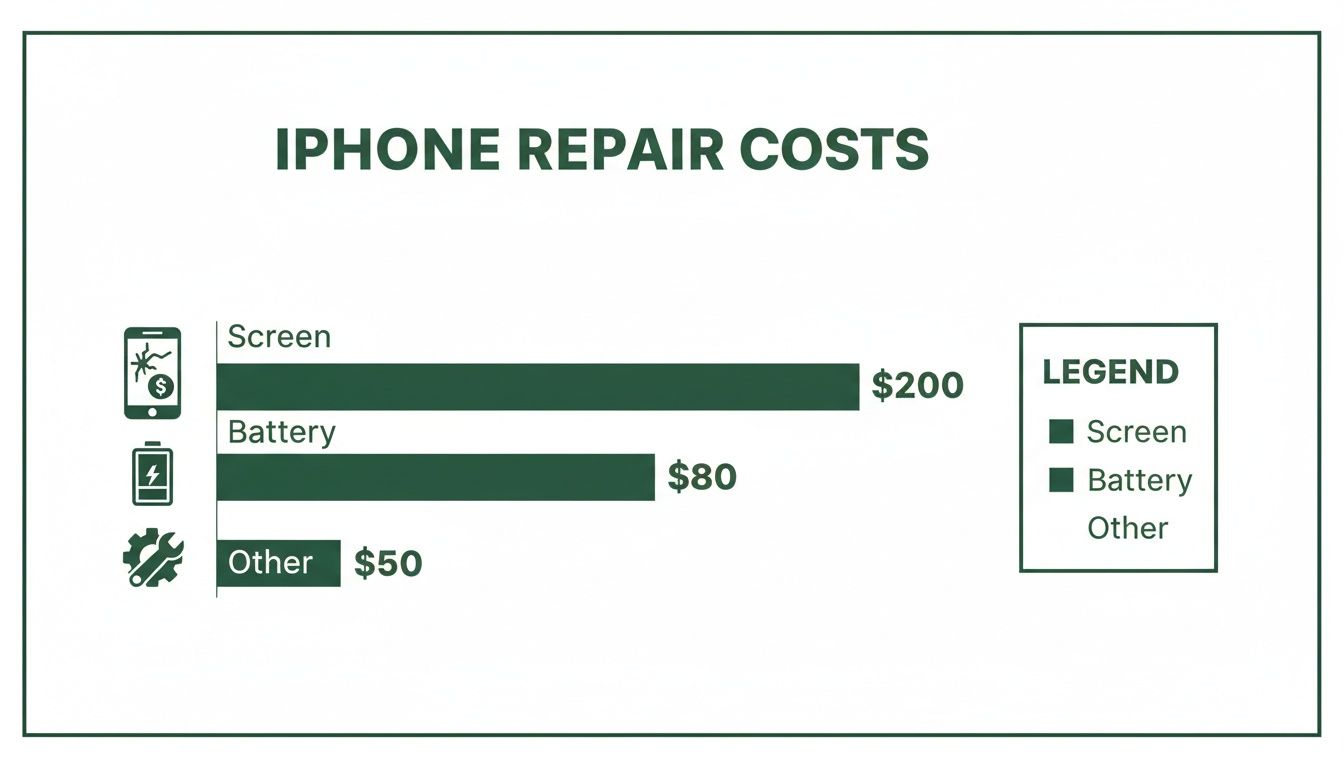
As you can see, screen repairs typically sit at the higher end of the price scale, while a fresh battery is a much more wallet-friendly way to boost your iPhone's performance.
Camera Malfunctions and Water Damage
Beyond cracked screens and tired batteries, a few other common problems can send you looking for a professional. These repairs are often more complex, and their costs can be a bit less predictable.
- Camera Issues: If your photos are coming out blurry or all you see is a black screen, the problem could be a damaged lens, a faulty sensor, or even a software glitch. Replacing the camera module on newer iPhones is delicate work, especially with the advanced multi-lens systems being so tightly integrated with the phone's main board.
- Water Damage: This is the real wildcard of iPhone repairs. A quick splash might not cause much harm, but a full dunking can lead to widespread corrosion on the logic board—the phone’s brain. A technician will need to do a full diagnostic to figure out the extent of the damage. The final bill could range from a simple cleaning fee to a price that makes buying a replacement phone the more sensible option.
This table provides a snapshot of typical price ranges for the most common iPhone repairs across different models, helping you budget accordingly.
| Repair Type | Older Models (e.g., iPhone 8/SE) | Mid-Range Models (e.g., iPhone 12/13) | Premium Models (e.g., iPhone 15 Pro) |
|---|---|---|---|
| Screen Repair | $110 - $290 | $250 - $450 | $450 - $690 |
| Battery Change | $80 - $120 | $100 - $150 | $130 - $180 |
| Camera Repair | $90 - $150 | $150 - $250 | $200 - $350+ |
| Water Damage Fix | $100 - $300 (Diagnostic & Basic) | $200 - $500+ (Varies) | $300 - $700+ (Varies) |
Keep in mind, these are just estimates. The final cost will always depend on the specific damage and the repairer you choose.
Where You Get Your iPhone Fixed Really Matters
The final bill for your iPhone repair isn't just about the damage; it's heavily influenced by who you trust with your device. Once you’ve figured out what’s wrong, the next big decision is choosing the right hands to fix it. This choice impacts not only the cost but also the quality of the parts, the repair time, and your peace of mind.
Think of it like choosing a mechanic for your car. You could go to the official dealership, an accredited specialist, or a trusted local garage. Each offers a different balance of price, convenience, and guarantees, and the same is true for iPhone repairs in Australia.
Official Apple Stores: The Premium Option
Going directly to Apple is the most straightforward route. You're guaranteed to get genuine Original Equipment Manufacturer (OEM) parts, which are identical to the ones your iPhone was built with. The technicians are Apple-certified, and the repair comes with a solid warranty.
But, this premium service comes at a premium price. Apple's repair costs are typically the highest on the market. You'll also likely need to book an appointment, and turnaround times can sometimes be longer if your device needs to be sent away.
Apple Authorised Service Providers
These are independent businesses that have been officially certified by Apple to perform repairs. They offer a great middle ground, providing the same genuine Apple parts and certified technicians as an Apple Store.
The main advantage here is convenience. You'll often find more of these providers around, particularly outside major city centres, which can mean shorter wait times. Prices are generally comparable to Apple's, but it's always worth checking as they sometimes have a little more flexibility.
When you're weighing up repair shops, knowing the principles of best customer service can help you spot a reliable provider. Positive reviews and clear, honest communication are always a good sign.
Independent Third-Party Repair Shops
These are your local, non-affiliated tech repair shops. Their biggest drawcard is almost always the price. They can offer more competitive pricing because they often use high-quality aftermarket parts instead of genuine Apple components. An aftermarket part is simply made by a different company but designed to function just like the original.
A good independent shop can deliver excellent results, often with a much faster turnaround time—sometimes completing a screen replacement in under an hour. However, the quality can vary significantly from one shop to the next.
This is where you need to do your homework. Look for shops with a strong local reputation, positive customer reviews, and a clear warranty on their parts and labour. You'll need to give them key details about your phone, and a great place to start is by learning how to retrieve the IMEI number on your iPhone, as this helps technicians identify the exact model and parts required.
Making The Right Choice For You
So, how do you decide? As a tech-savvy friend would tell you, the best option really depends on your priorities. Here’s a quick comparison to help you weigh up the pros and cons of each.
| Feature | Apple Store | Authorised Service Provider | Independent Repair Shop |
|---|---|---|---|
| Cost | Highest | High | Lowest |
| Part Quality | Genuine OEM Parts Guaranteed | Genuine OEM Parts Guaranteed | High-Quality Aftermarket or OEM |
| Warranty | Strong Apple Warranty | Strong Apple Warranty | Varies by Shop (Crucial to Check) |
| Speed | Can Be Slower (Appointments Needed) | Generally Faster Than Apple | Often Fastest (Walk-ins Welcome) |
| Convenience | Limited to Official Store Locations | More Locations Available | Widely Available in Most Suburbs |
Ultimately, if having a genuine Apple part and an official warranty is non-negotiable for you, stick with Apple or an authorised provider. But if you're on a tighter budget and need a quick fix, a well-regarded independent shop can be an excellent, cost-effective alternative. Just be sure to verify their warranty and reputation before handing over your device.
What Goes Into Your Final Repair Bill?
Ever wondered why your mate got a different quote for the exact same cracked screen on the exact same iPhone? The final number on that repair bill isn't pulled out of a hat; it's a mix of a few key things. Getting your head around these factors is the best way to know what to expect and avoid any nasty surprises when it's time to pay.
Knowing what drives the price up or down helps you ask the right questions and spot a fair deal when you see one. It’s about more than just the visible damage. Let's break down the five things that can really shift the final cost of your repair.
Your iPhone Model and Its Age
This one’s the biggest by a long shot. Think of it like this: replacing a part on a brand-new car is always going to cost more than on a ten-year-old model. It’s the same deal with iPhones. A new iPhone 15 Pro, with its advanced OLED screen, complex camera system, and tightly packed components, is just more expensive to build—and therefore, more expensive to fix.
On the flip side, parts for an older model like an iPhone 11 or an SE are everywhere. They're based on older, less costly tech, which makes them much cheaper to repair. The age and model of your device are directly tied to how easy it is to find parts and how much they’ll cost.
Genuine vs. Aftermarket Parts
The type of part used for the repair plays a massive role in the final cost. You’ll usually come across two options:
- Original Equipment Manufacturer (OEM) Parts: These are the real deal, made by or for Apple. They guarantee a perfect fit and flawless performance but you’ll pay a premium for them. Apple Stores and their Authorised Service Providers will only ever use these.
- Aftermarket Parts: These are made by third-party companies. A high-quality aftermarket part can work just as well as an original for a fraction of the cost, which is why they’re so popular at independent repair shops. The quality can vary though, so you need to trust your repairer.
It’s the classic trade-off: guaranteed quality at a higher price, or great value with a tiny bit of risk.
The Repair Warranty
A repair is only as good as the warranty backing it up. Any decent technician or shop will stand by their work. This warranty is their promise that if the new part fails because of a defect or a mistake during installation, they'll fix it again for free.
A "lifetime warranty" sounds great, but always check the fine print. Most warranties cover the part itself against defects, not new accidental damage. If you drop your phone again a week later, that’s on you.
A longer, more comprehensive warranty might add a little to the initial cost, but it buys you priceless peace of mind. A shop that offers no warranty at all? That's a huge red flag.
Your Location in Australia
Just like a flat white costs more in Sydney’s CBD than in a quiet suburban town, repair prices change depending on where you are. Labour rates, rent for the shop, and how much local competition there is all affect what technicians have to charge to keep the lights on.
You'll probably find that a repair shop in a bustling Melbourne shopping centre charges more than one in a regional town. It’s always worth getting a couple of quotes from different places if you can—you might save a fair bit just by travelling a little further.
Hidden or Additional Damage
Sometimes, what you can see is just the tip of the iceberg. You might take your phone in for what looks like a simple screen replacement, only for the technician to find the impact also damaged the Face ID sensor or slightly bent the phone's frame.
This is super common with water damage, where sneaky corrosion can spread to multiple internal parts you can't see. A good technician will always do a full diagnostic before they start and will call you for approval if they find other issues that will add to the iPhone repair cost. That sort of honesty is a sure sign you're in good hands.
Repair, Replace or Go Refurbished: A Smart Decision Framework
So you’ve just gotten a repair quote, and it’s a bit more than you were hoping for. Now comes the big question: is it actually worth fixing? It’s a classic head-scratcher. You don’t want to throw good money after bad, but rushing out to buy a brand-new device isn’t always the smartest move either.
The choice isn’t just a simple toss-up between fixing your old phone and buying a new one. There’s a powerful third option that often hits the sweet spot for value: going refurbished. Let's break down how to weigh these choices so you can find the path that best suits your needs and your budget.
The 50 Percent Rule: A Simple Guideline
A great place to start is with the 50% rule. Think of it as a quick financial gut-check to see if a repair makes sense.
If the cost of the repair is more than 50% of the current resale value of your iPhone, it’s time to seriously consider your other options. Spending $350 to fix an iPhone 11 that’s only worth $450 is a much tougher pill to swallow than a $100 battery replacement on the same device.
To put this rule into action, you need to figure out your phone's current market value. A quick search on marketplaces like Trade.com.au for your exact model and condition will give you a realistic idea of what it’s worth. Once you have that number, pit it against your repair quote. This simple calculation cuts through the emotion and gives you a clear, data-driven perspective.
When Repairing Makes the Most Sense
Even with a high iPhone repair cost, fixing your current device is sometimes the undisputed best choice. A repair is often the most logical and economical option in these situations:
- The Repair is Minor and Affordable: If you're looking at a relatively low-cost fix, like a battery replacement or a new charging port, repairing is almost always a win. It's a small investment that can breathe another year or two of life into your phone.
- Your Phone is Still Relatively New: For a device that's only a year or two old, a screen replacement is usually far cheaper than buying the latest model outright. You've already made the big investment, so a repair protects that value.
- You're Happy with Your Current Phone: If your iPhone still does everything you need it to and you aren't fussed about the latest features, fixing it is a no-brainer. There’s no need to spend hundreds more on an upgrade you don’t really need.
The Third Option: The Smartest Choice of All
But what happens if the repair cost blows past the 50% rule? Before you resign yourself to the eye-watering price of a brand-new phone, there’s a smarter alternative: buying a certified refurbished iPhone.
This option truly offers the best of both worlds. A refurbished phone from a trusted source like Trade.com.au is a pre-owned device that has been professionally tested, repaired, and certified to be in perfect working order. It often comes with a warranty, giving you the same peace of mind as a new device.
Choosing a refurbished model is often more affordable than a major repair on an older phone. For instance, if you're quoted $500 to fix the screen on your iPhone 12, you might find a certified refurbished iPhone 13 for a similar price. In this scenario, you get a newer, better device for the same cost as fixing your old one. You can explore our expert advice on where to buy refurbished iPhones in Australia to find a reliable device that fits your budget.
If you ultimately decide that repairing or upgrading isn't the right path for your old device, responsible disposal is key. If you're wondering what to do with your old tech, you can learn how to prepare your Apple and other mobile devices for recycling to ensure it’s handled correctly. This helps protect the environment and keeps e-waste out of landfills.
How to Protect Your iPhone and Avoid Future Repair Costs
Let's be honest, the cheapest repair is the one you never have to make. While it’s smart to know what a fix might cost, a little bit of prevention can save you a whole lot of money and stress down the track.
You don't need to wrap your iPhone in cotton wool. Just a few simple habits and the right accessories can drastically lower the odds of that heart-stopping moment when it slips from your grasp. Here are a few practical ways to safeguard your iPhone and keep it out of the repair shop.
Invest in Smart Protection
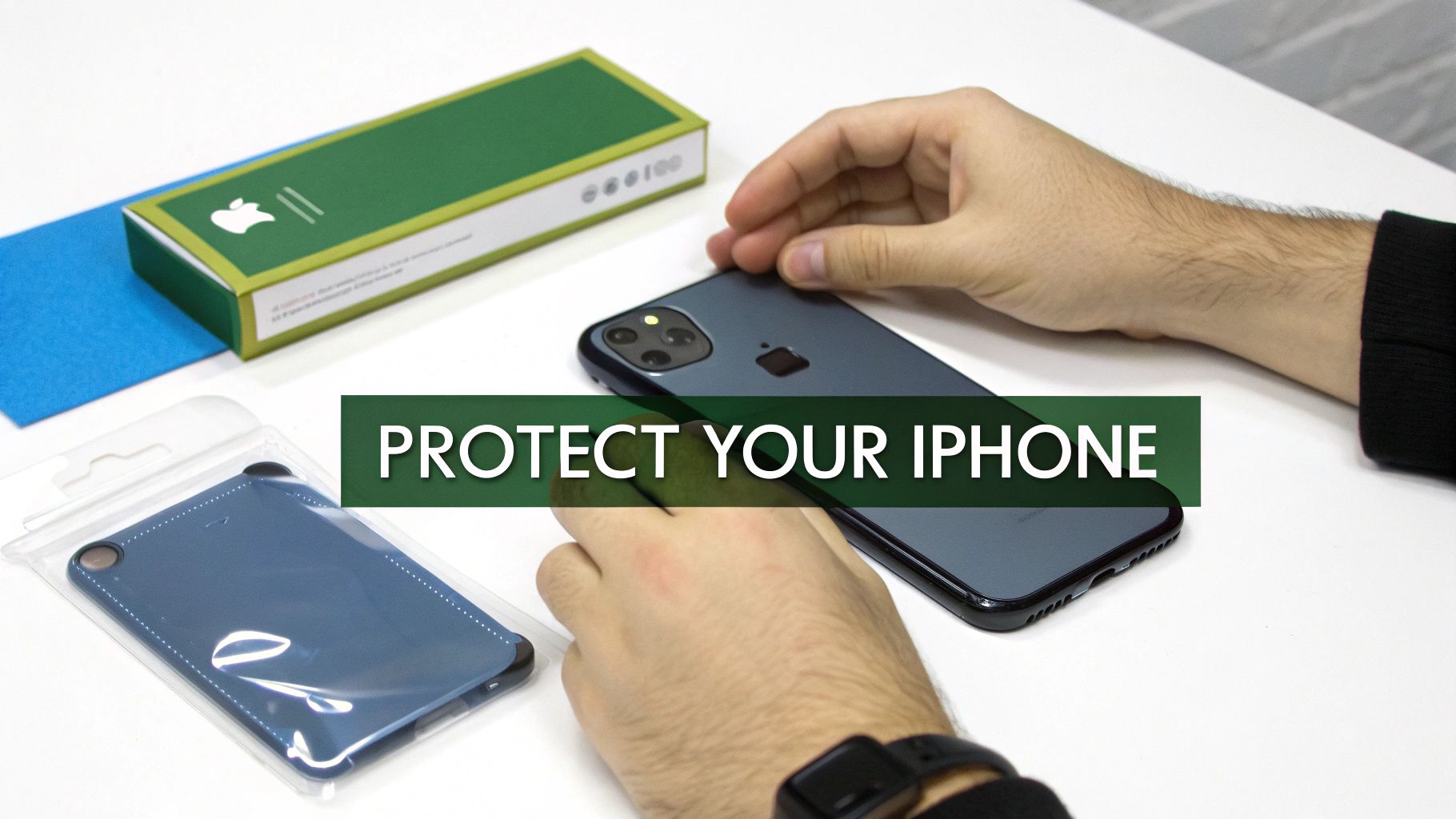
Your first line of defence should always be a good case and screen protector. This isn't about spending a fortune; it's about choosing wisely to prevent cracked screens and dented frames from everyday bumps and drops.
- Choose a Quality Case: Look for one with a raised "lip" around the screen and camera lenses. That tiny bit of extra height is a game-changer, ensuring the glass itself doesn’t make direct contact with the ground if it falls flat.
- Apply a Tempered Glass Screen Protector: These are miles better than flimsy plastic films at absorbing shock. A $15 screen protector shattering is a much happier outcome than a $400 screen doing the same.
Understand Water Resistance Limits
One of the biggest myths is that modern iPhones are waterproof. They're not. They are water-resistant, and that's a massive difference. An IP rating (like IP68) means the phone can survive a dunk in fresh water for a short time, but this seal weakens with age and wear.
Think of water resistance as a safety net for accidents—a splash of rain, a spilled drink, or a quick drop in the sink. It's not a green light to take your iPhone for a swim in the ocean. Saltwater is especially corrosive and will wreck the internal parts.
The safest bet? Treat your iPhone as if it has no water resistance at all. That simple mindset shift can help you dodge one of the most unpredictable and expensive repairs.
Adopt Healthy Battery Habits
Your iPhone's battery health will naturally decline over time—that’s just chemistry. But you can slow that process down significantly and put off needing a replacement with a few easy habits.
- Avoid Extreme Temperatures: Leaving your phone to bake on a car dashboard or out in the freezing cold can permanently damage the battery’s ability to hold a charge.
-
Enable Optimised Battery Charging: Flick this on in
Settings > Battery > Battery Health & Charging. It learns your daily routine and holds off charging past 80% until you need it, which is much gentler on the battery. - Keep It Between 20% and 80%: While it's not always possible, try to avoid letting your phone die completely or leaving it plugged in at 100% for hours on end. This "sweet spot" helps preserve its long-term health.
Sometimes, performance issues are caused by software glitches, not failing hardware. If you notice things acting up, learning how to do an iPhone factory reset can be a great troubleshooting step before you book a repair. By combining physical protection with smart habits, you can keep your iPhone running smoothly for years.
Your Top Questions About iPhone Repair Costs Answered
Still got a few questions rattling around? Don't worry, that's normal. Here are the most common queries we get about the real cost of iPhone repairs in Australia, with some straight-talking answers to help you decide.
Will Getting My Phone Fixed at a Third-Party Shop Void My Warranty?
This is a big one, and the answer is more nuanced than a simple yes or no. Thanks to strong Australian consumer laws, getting an independent shop to fix your screen or battery won't automatically kill your entire Apple warranty.
The catch is this: if that third-party repair causes a new problem down the line—say, a faulty screen replacement messes with Face ID—Apple is well within its rights to refuse a warranty claim for that specific issue. It's a classic trade-off between saving money upfront and carrying a little more risk later.
Does AppleCare+ Mean Repairs Are Totally Free?
AppleCare+ is a fantastic safety net, but it's not a get-out-of-jail-free card. Think of it more like an insurance policy with an excess. You'll still need to pay a service fee if you accidentally crack your screen or shatter the back glass.
Now, that fee is much, much lower than the out-of-warranty price, but it’s not zero. The one big exception? AppleCare+ will cover a completely free battery replacement if your battery’s health ever dips below 80% capacity.
Should I Just Replace the Screen or Get a Whole New Phone?
For any recent iPhone model, fixing the screen is almost always going to be cheaper than buying a brand-new one off the shelf. A better way to frame the question is to compare the repair cost to your phone's current value or, even smarter, the price of a high-quality refurbished model.
Here’s a good rule of thumb: if a repair is quoted at more than 50-60% of your phone's current resale value, it's time to pause and think. Pouring that much cash into an older device might not be the best move. Often, you could put that same money towards a newer, warrantied refurbished phone and get far better value in the long run.
Ready to weigh your options? Instead of a costly repair, consider upgrading to a device that’s been professionally tested and certified. Explore a huge range of verified refurbished tech with a 12-month warranty at Trade.com.au and find your perfect upgrade today.