

A Clear Guide to iPhone Repair Prices in Australia
We've all felt it. That heart-stopping moment when your iPhone slips and meets the pavement with a sickening crunch. The first thought isn't about the dropped calls or cracked selfies—it's usually, how much is this going to cost me?
In Australia, iPhone repair prices can swing from as low as $45 for a simple fix to well over $600 for something complex, like a screen replacement on a brand-new model. What you end up paying really comes down to which iPhone you have and what's actually broken.
A Quick Guide to iPhone Repair Prices
Before you can make a smart decision about a repair, you need a realistic idea of the cost. These prices aren't pulled out of thin air; they directly reflect your iPhone's model, how tricky the repair is, and the quality of the parts being used.
Think of it like getting your car fixed. Servicing a brand-new performance car is always going to be more expensive than a tune-up for an older, standard model. iPhones follow the exact same logic.
This guide will give you a clear, upfront look at what you can expect to pay. Whether it’s a shattered screen, a battery that dies by lunchtime, or a mysterious glitch, knowing the price spectrum helps you weigh your options. Should you fix your current device, or would a high-quality refurbished iPhone from Trade.com.au be a smarter move?
To give you a clearer picture, here’s a quick breakdown of what you might expect to pay for common iPhone repairs across Australia.
Average iPhone Repair Costs in Australia at a Glance
This table provides a quick summary of typical repair price ranges for common iPhone issues, helping you quickly estimate potential costs.
| Repair Type | Average Cost Range (AU$) |
|---|---|
| Screen Replacement | $149 - $679 |
| Battery Replacement | $79 - $149 |
| Charging Port Repair | $79 - $279 |
| Rear Glass Replacement | $149 - $229 |
| Water Damage Repair | $79 - $149 |
| Camera Replacement | $99 - $249 |
| Button/Switch Repair | $69 - $129 |
Keep in mind these are just averages. The final figure will always depend on your specific model and the repairer you choose.
Why Do Repair Prices Vary So Much?
So, why the huge price gap? In Australia, the average iPhone repair can be anywhere from $45 to $679, with the median cost sitting at $362. This isn't just random—a few key factors are at play:
- Your Location: Labour costs are different everywhere. A repair shop in the Brisbane CBD will have different overheads than one in a quieter regional town, and that's reflected in the price.
- The Repairer You Choose: Official Apple stores, authorised service providers, and independent local shops all have completely different pricing models.
- The Problem Itself: A straightforward battery swap is one of the cheapest fixes you can get. A screen and sensor replacement for a new iPhone 15 Pro Max? That's going to be at the absolute top end of the scale.
A good rule of thumb is to always get at least two quotes before you commit. It gives you a much better feel for the fair market price and helps you spot anyone who might be overcharging.
Ultimately, you're looking for that sweet spot between a fair price and a quality repair that will actually last. This means looking beyond the initial quote and thinking about the real value you’re getting for your money.
What Really Determines Your Repair Bill?
Ever stared at an iPhone repair quote and wondered why the price seems all over the place? A screen fix for one person might be $150, while a similar-looking phone gets a bill for over $600. It’s not random, we promise. A few key things come together to set that final price, and once you know what they are, the numbers start to make a lot more sense.
Think of it like getting a car fixed. You wouldn’t expect a simple oil change on a Toyota to cost the same as rebuilding the engine on a high-performance European sports car. The same logic applies directly to your iPhone. Before you agree to any work, it's also worth getting clear on the difference between understanding repair quotes and estimates, as one is a fixed price and the other can change.
Let’s pull back the curtain and look at the four main things that shape your iPhone repair bill.
Your iPhone Model Matters Most
This is the big one. The single most significant factor in any repair cost is the model of your iPhone. Newer, top-of-the-line models like the iPhone 15 Pro are packed with advanced tech, like sophisticated OLED screens with ProMotion. Those parts are just plain expensive to make and, therefore, expensive to replace.
On the other hand, an older but still very capable model like an iPhone 11 uses more established and less costly LCD technology. The price gap isn’t just about the screen, either—it applies to everything from the multi-lens camera systems and Face ID sensors to the specific glues needed to put it all back together perfectly.
The Type and Extent of Damage
Not all drops are created equal. A simple battery replacement is one of the most affordable and straightforward jobs out there. It’s a fantastic way to breathe new life into an older iPhone without spending a fortune. A cracked screen is more involved, sure, but it’s a routine fix for any decent technician.
Where the costs really start to climb is with more complex problems.
- Back Glass Damage: This one surprises people. Because of how modern iPhones are built, fixing a shattered back often means replacing the entire housing of the phone, making it a surprisingly pricey job.
- Water Damage: This is the ultimate unknown. Water gets everywhere, and a technician has to perform extensive diagnostics to hunt down every last bit of corrosion. It's time-consuming and unpredictable.
- Logic Board Failure: This is the equivalent of major engine surgery for your phone. It requires a specialist with micro-soldering skills to fix tiny components on the phone's "brain," making it one of the most technical and expensive repairs possible.
The deeper the damage, the higher the labour and parts cost. A cracked screen is a cosmetic issue; a failing logic board is a critical failure that demands a far more intensive (and expensive) solution.
The Quality of Replacement Parts
The parts used for the repair will massively influence both the price you pay and how well your phone works afterwards. You’re generally looking at two main options: genuine Apple parts or third-party (aftermarket) alternatives.
Genuine Apple Parts: Sourced directly from Apple, these are identical to the parts your phone was built with. They offer guaranteed performance and perfect compatibility, but they also come with a premium price tag. Only Apple and its Authorised Service Providers can get their hands on these.
Aftermarket Parts: These are components made by other companies to serve as replacements. While they’re much cheaper, their quality can be a real lucky dip. A low-grade screen might have washed-out colours or poor touch response, while a cheap battery could be a safety risk or die within a few months.
Choosing high-quality parts is non-negotiable for a lasting repair. Saving a few bucks today with a cheap, unreliable component often just means you’ll be back for another repair down the road. It’s the classic case of getting what you pay for.
Labour Costs and Shop Overheads
Finally, the price reflects the person doing the work and the business they run. Labour rates are a big part of the cost, and they vary based on the technician’s experience and where they’re located. An expert technician in the middle of Brisbane is going to charge more than a hobbyist working out of their garage.
The repair shop's own costs—like rent for their storefront, specialised tools, insurance, and offering a solid warranty—are also baked into the price. An established business that backs its work with a lifetime warranty has higher running costs than a small pop-up kiosk, and you'll see that reflected in what they charge.
The Most Common (and Costly) iPhone Repairs
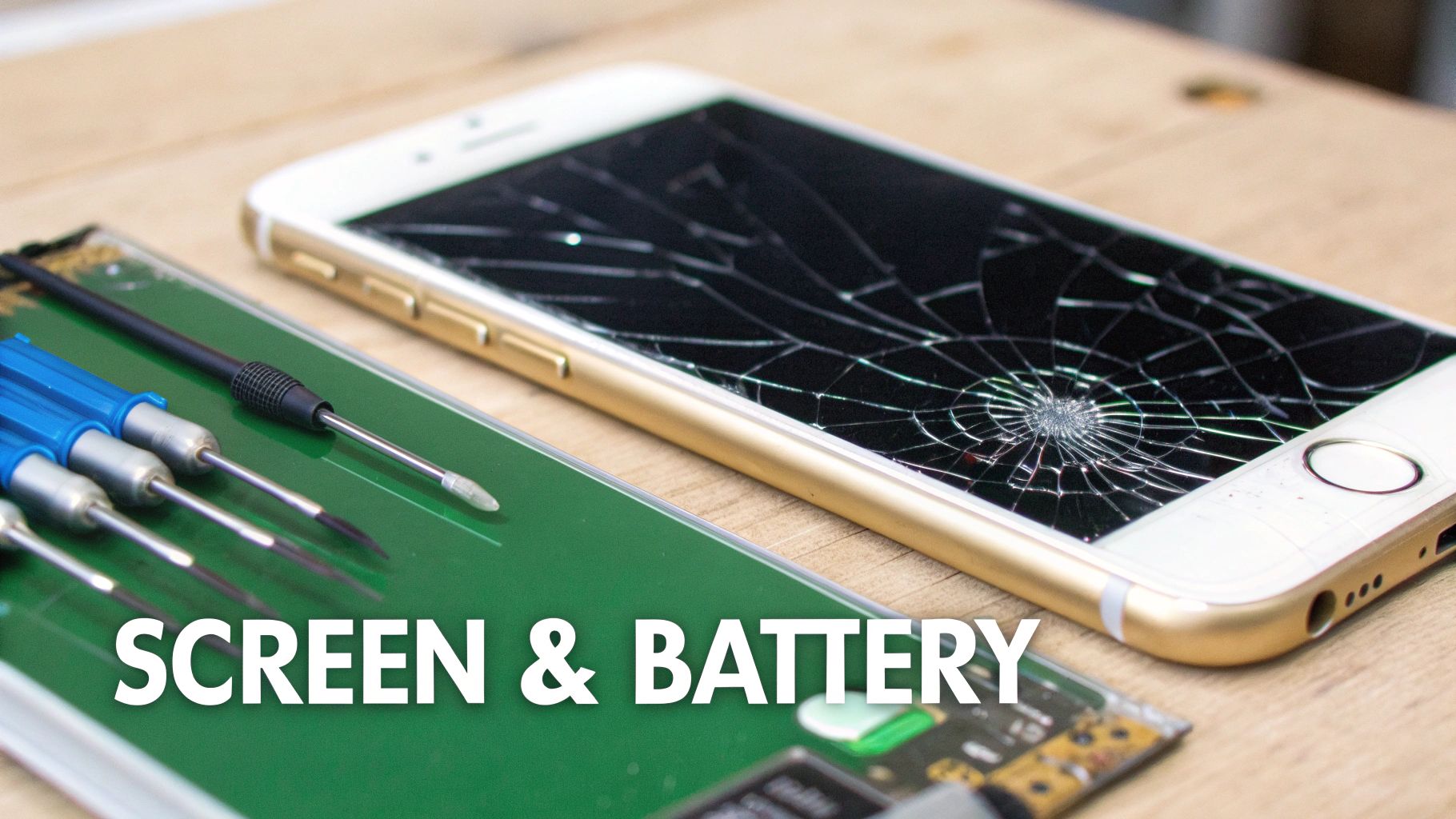
When an iPhone takes a tumble, it’s almost always the screen or the battery that pays the price. These two components are the usual suspects in the world of phone repairs, but the dent they leave in your wallet can be worlds apart.
To really get a handle on iPhone repair prices, you need to understand what’s involved with these common fixes. One is a simple refresh, while the other can turn into a surprisingly complex—and expensive—operation.
The Heartbreak of a Shattered Screen
A cracked screen is more than just a visual annoyance; it’s the number one reason iPhones end up on a repair bench. What’s surprising to many is how the cost to fix that same old problem has shot up as Apple has rolled out newer, fancier display technology.
Older iPhones used standard Liquid Crystal Display (LCD) screens, which were pretty straightforward and affordable to replace. But modern iPhones, especially the Pro models, now boast incredible Organic Light-Emitting Diode (OLED) and Super Retina XDR displays. While they deliver stunning colours and brightness, they’re also a lot more complex to make, which sends the repair bill soaring.
Screen replacements are easily the most common iPhone repair in Australia, with costs typically ranging from $150 to over $400. That’s a fair bit higher than the usual $90–$250 you’d expect for an Android phone, mostly because Apple keeps a tight grip on its parts. For a newer iPhone model, a simple front screen fix could set you back over $250, and if you’ve damaged the back glass too, you could be looking at a bill closer to $400. You can get a deeper dive into the average price of iPhone screen repairs in our detailed guide.
The Double-Trouble of Front and Back Glass Damage
This is where repair costs can get out of hand. A front screen crack is bad enough, but a clumsy drop can easily shatter the back panel at the same time. On the latest iPhones, the back glass isn’t just a cosmetic piece; it’s fused directly to the phone’s chassis and internal components, including the wireless charging coil.
Because of this integrated design, fixing the back glass isn’t a simple swap. It often requires replacing the entire housing of the phone—a much more difficult and time-consuming job.
When you’ve broken both the front screen and the back glass, the repair bill can quickly climb to match—or even beat—the price of a high-quality refurbished iPhone. This is often the tipping point where buying a replacement device is the smarter financial move.
The Affordable Lifeline of a New Battery
Now for some good news. A battery replacement is one of the most cost-effective and high-impact repairs you can do. If your iPhone dies halfway through the day or randomly shuts down, a new battery can make it feel brand new again for a tiny fraction of what a new phone costs.
In Australia, an iPhone battery replacement will usually cost between $79 and $149. The price difference really comes down to whether you go for an official Apple part or a quality third-party alternative.
It's a fantastic value fix for a few key reasons:
- It Restores Performance: A fresh battery doesn’t just last longer. It can also bring back your iPhone's original speed, as old, worn-out batteries can cause the device to throttle its performance.
- It Extends Your Phone’s Life: It’s a simple way to squeeze another year or two of solid use out of a phone you already know and love.
- It’s an Eco-Friendly Choice: Replacing just the battery instead of the whole phone is a far more sustainable option that helps reduce e-waste.
For its low cost and big impact, a battery swap is often the smartest money you can spend on an older iPhone. It keeps your device reliable and performing well, bridging the gap until you’re truly ready for an upgrade.
Choosing Your Repair Path
When your iPhone screen looks like a spiderweb, figuring out who should fix it can be just as stressful as the damage itself. You've got a few different paths you can take, and the right one for you really depends on what you value most. Is it a rock-solid warranty, the absolute lowest price, or something in between?
Think of it like getting your car serviced. You can go straight to the manufacturer's dealership (Apple), visit a certified mechanic (an Authorised Service Provider), or trust a skilled local garage (an independent shop). Each has its own set of pros and cons, especially when it comes to iPhone repair prices.
This decision tree shows the main repair paths you can take and what to expect from each.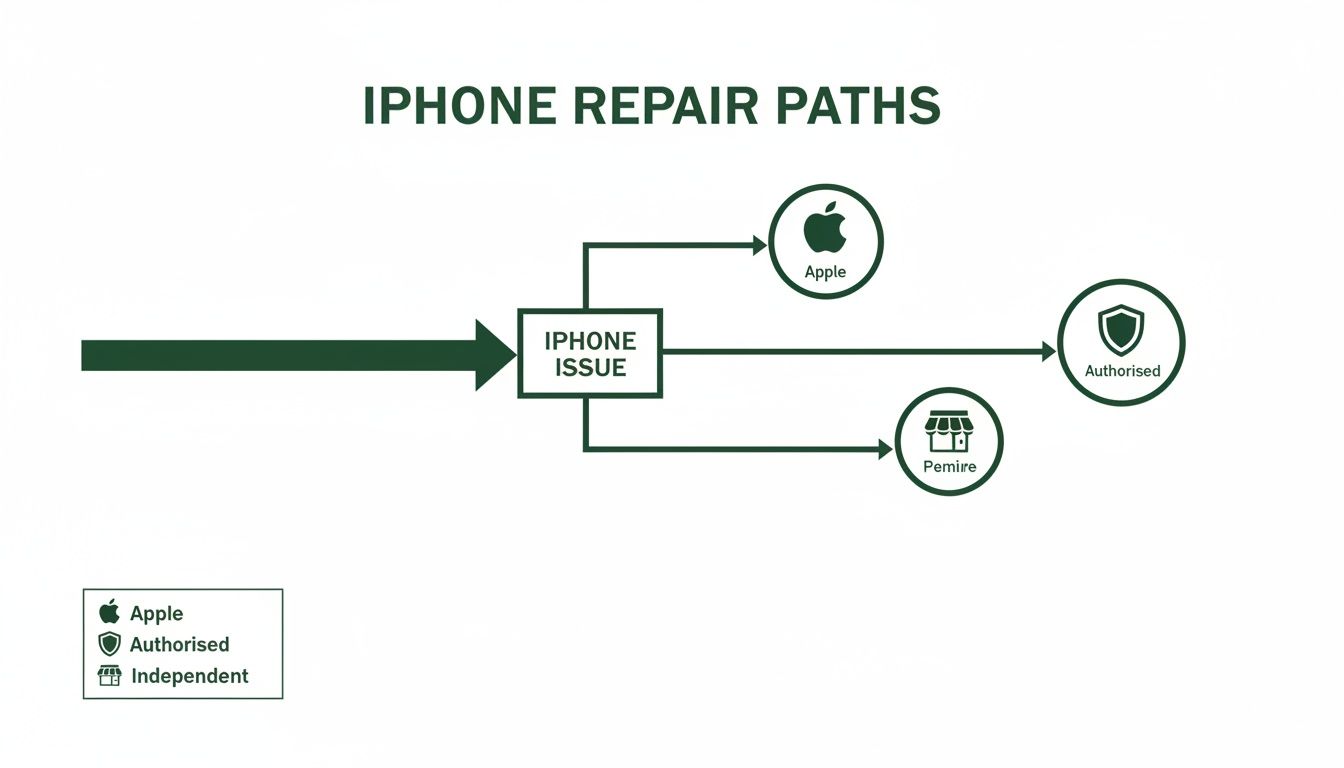
As you can see, your choice creates a trade-off. You're balancing the highest cost with guaranteed quality from Apple against the lowest cost but variable quality from independent shops.
The Official Apple Store Route
Going directly to Apple is the premium option. It's the only way to be 100% certain you're getting genuine Apple parts installed by technicians trained by Apple themselves.
- Pros: You get original parts, an Apple-backed warranty on the repair, and the peace of mind that comes with their high standards. Crucially, your phone’s existing warranty stays intact.
- Cons: This is almost always the most expensive option. You’ll pay a premium for that brand-name service, and getting an appointment can sometimes be a hassle.
The Authorised Service Provider Middle Ground
Apple Authorised Service Providers (AASPs) are third-party businesses that have been officially certified by Apple to perform repairs. They have access to the same genuine parts, tools, and training as Apple's own stores.
This is often the best of both worlds. You get the reliability and quality of an official repair but with the convenience and potentially faster service of a local business. The pricing is usually very similar to Apple's, but it's always worth checking as some may offer slightly different labour rates.
The Local Independent Repair Shop
Your neighbourhood phone repair shop is where you’ll usually find the most competitive iPhone repair prices. These independent businesses are the backbone of the local repair economy and often offer fast, walk-in service.
- Pros: They are typically the cheapest and fastest option. A screen replacement can often be done in under an hour while you wait.
- Cons: The quality can be a lucky dip. These shops don't have access to genuine Apple parts, so they rely on aftermarket alternatives which can vary wildly in quality. A poor-quality screen might have bad colours or be unresponsive, and a cheap battery could be a safety risk.
A good independent shop will be upfront about where they get their parts and will stand by their work with a warranty. Always ask.
The Risky DIY Path
For the tech-savvy and brave, Do-It-Yourself (DIY) repair kits are available online. These kits come with the necessary parts and tools to fix your phone yourself, promising big savings.
However, this path is filled with potential traps. iPhones are incredibly complex, and one tiny mistake—like misplacing a screw or tearing a delicate ribbon cable—can turn a simple screen repair into a dead phone. While tempting, DIY is best left to those with experience. If you are interested in this route, you can learn more about the challenges in our breakdown of Apple's Self Service Repair program.
Ultimately, the best choice balances your budget with your need for reliability. An authorised repair offers peace of mind, but a trusted local shop can deliver fantastic value if you do your homework.
Repair or Replace: The Smarter Financial Choice
You’ve just been hit with a hefty repair quote, and now you’re facing the big question: is it really worth fixing your old iPhone, or is it time to cut your losses and replace it? This is one of those moments where a smart decision can save you hundreds of dollars down the track.
The answer often comes down to simple maths. Pouring a big chunk of cash into an ageing device can be a bad investment, especially when that same money could go towards a newer, more reliable phone that comes with a full warranty.
The 50 Percent Rule of Thumb
Here’s a straightforward guideline we always share with people to help them decide: if the cost of the repair is more than 50% of the price of a comparable certified refurbished model, it’s usually better to replace it. This simple rule helps you avoid over-investing in a phone that might be nearing the end of its useful life anyway.
Let's walk through an example. Say you've shattered the screen and back glass on your iPhone 12. The repair quote comes in at a painful $450. A quick search on a marketplace like Trade.com.au shows you can get a certified refurbished iPhone 12 in excellent condition, with a warranty, for around $600.
Since the $450 repair is well over half the $600 replacement price, the smarter financial move is to put that money towards the refurbished device. You get a fully functional phone—often with a fresh battery—and the peace of mind that comes with a warranty. That’s something your newly repaired, but still old, phone just can't offer.
Why a Refurbished iPhone is a Secure Investment
When a repair bill is high, it’s not just about the immediate cost. You have to think about the long-term value. Sinking money into an old phone doesn't reset its age; the other components, like the logic board or battery, are still just as old as they were before the screen got fixed.
This is where buying from a trusted marketplace like Trade.com.au becomes such a financially sound choice.
- You Get a Warranty: Every certified refurbished device from Trade.com.au comes with a warranty. If something unexpected goes wrong, you’re covered. A repair on your old phone typically only warranties the specific part that was replaced, not the rest of the device.
- It’s Fully Tested and Certified: A "refurbished" phone isn't just a "used" phone. It has been put through a comprehensive testing process to ensure every single component—from the battery to the camera—meets strict quality standards.
- It's a Better Use of Your Money: For students, small businesses, or families on a budget, a refurbished iPhone is more than just a cheaper option. It’s a secure investment in a reliable device that’s guaranteed to work perfectly, without the hidden risks of an old phone with a recent expensive repair.
The screenshot below from Trade.com.au shows a range of refurbished iPhone models available at competitive prices, giving you a clear idea of what your repair budget could buy instead.
This shows that for the cost of a major repair on an older model, you can often step up to a newer, fully certified refurbished iPhone with a warranty included.
When you compare a $400+ repair bill with no long-term guarantees to a similarly priced, fully vetted refurbished phone, the choice becomes clear. One is a gamble; the other is a smart, reliable upgrade.
Ultimately, the goal is to have a phone you can depend on without breaking the bank. By applying the 50% rule and exploring your options, you can avoid the cycle of costly repairs and make a choice that delivers better value, performance, and security for your money.
Smart Tips to Avoid Costly Repairs
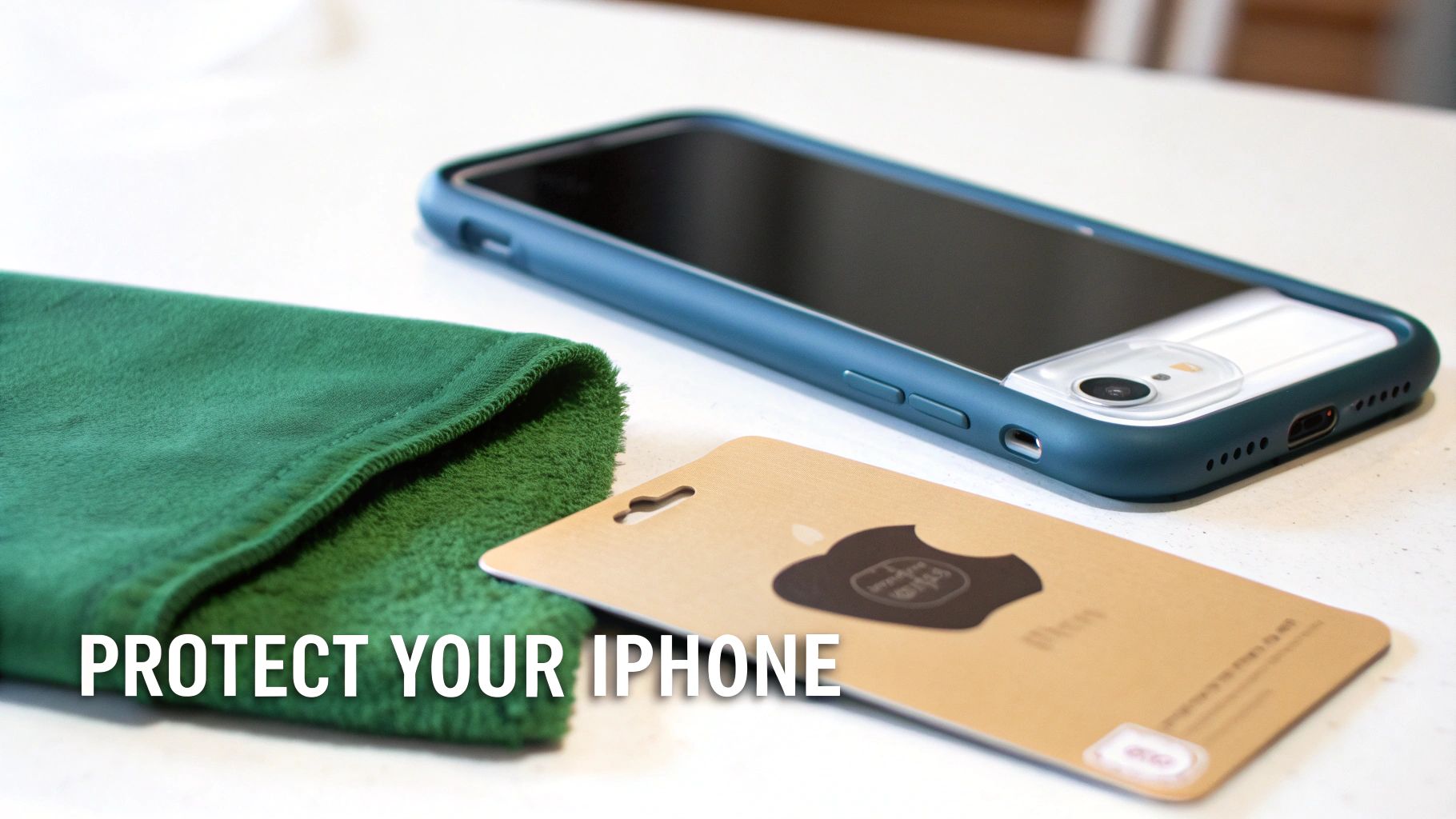
While it's good to know the numbers around iPhone repair prices, let's be honest: the best repair is the one you never have to do in the first place. A little bit of prevention can go a seriously long way in protecting your phone—and your wallet—from those gut-wrenching, unexpected bills.
Taking a few simple, proactive steps can dramatically reduce your chances of staring at a cracked screen or dealing with the dreaded water damage. Think of it as a small investment today to avoid a much bigger headache tomorrow.
Invest in Quality Protection
The single most effective thing you can do is get a good case and a quality screen protector. It sounds obvious, we know, but not all protection is created equal, and this is one area where you don't want to cut corners.
-
A Solid Case: Look for a case that has a raised lip around the screen and camera lenses. That tiny design feature is a game-changer. It means if your phone falls flat, the glass itself never actually touches the ground. Materials like silicone or TPU are brilliant for absorbing the shock from a drop.
-
A Tempered Glass Screen Protector: These are miles better than those flimsy plastic films. A decent tempered glass protector is designed to take the hit, absorbing the impact from a drop and shattering so your phone’s actual screen doesn't have to. It’s a $20 shield that can save you from a $400 repair bill.
Practice Smart Habits
Beyond physical protection, a few mindful habits can help you steer clear of the most common tech tragedies. Keeping your phone away from water is a big one. Newer iPhones are more water-resistant, but they're not waterproof, and liquid damage is almost never covered by the warranty.
Paying attention to your battery can also make a huge difference in its lifespan. To get the most out of every charge, have a look at our guide on how to maintain your iPhone's battery health for the long haul.
The goal isn't to wrap your phone in cotton wool. It's just about making smart choices that minimise risk. A little awareness can save you from a major financial headache.
Turn a Broken Phone into a Smart Discount
Even with the best intentions, accidents happen. When they do, it’s easy to see your broken iPhone as nothing more than a problem that’s going to cost you money. But what if you looked at it as an opportunity instead?
Instead of shelling out for a repair, consider a smarter, money-saving strategy: trading it in.
A lot of people don’t realise that even a damaged iPhone still holds value. Platforms like Trade.com.au let you trade in your broken device and get a credit towards a fully functional, certified refurbished model. Suddenly, that potential repair bill becomes a significant discount on your next phone.
This approach isn’t just about saving a few dollars; it's about getting better value. You move from a damaged, ageing device to a newer, fully tested one that comes with a warranty. It’s an empowering way to break the cycle of costly repairs and make a financially savvy upgrade.
Common Questions About iPhone Repair Prices
Alright, let's wrap things up by tackling some of the most common questions we hear from Aussies trying to figure out iPhone repairs. Getting straight answers can help you make the final call with confidence.
Is It Worth Fixing a Very Old iPhone?
Honestly, probably not. If your iPhone is more than four or five years old—think an iPhone 8 or X—the cost to fix it often creeps up higher than what the phone is even worth anymore.
A good rule of thumb is the 50% rule. If the repair costs more than half the price of a newer, quality refurbished model, it’s usually smarter to put that money towards an upgrade. Pouring cash into obsolete tech is rarely a good investment in the long run.
Do Third-Party Screens Affect Features Like True Tone?
Yes, this is a big one. Features like True Tone, Face ID, and even the automatic brightness setting rely on very specific sensors that are calibrated to the original Apple screen.
While some high-quality aftermarket screens do a decent job, cheaper parts will almost certainly cause these features to glitch out or stop working altogether. Only genuine Apple parts, installed by Apple or an Authorised Service Provider, will guarantee 100% functionality is retained.
Be warned: using a non-genuine screen can sometimes trigger a persistent "Important Display Message" on your iPhone. This is Apple's way of telling you it can't verify the part. It might be a minor annoyance, or it could be a sign of bigger issues depending on the part's quality.
What Is the Average Repair Turnaround Time?
This really depends on where you go.
- Apple Stores: If you book an appointment, they can often handle common jobs like screen and battery swaps on the same day.
- Authorised Service Providers: These guys also aim for a same-day or 24-hour turnaround for most standard fixes.
- Independent Shops: Often the fastest option. Many local shops offer walk-in screen or battery replacements and can have you sorted in under an hour.
Keep in mind, for more serious problems like water damage or logic board issues, any reputable repairer will need a few days to properly diagnose the problem and carry out the fix.
Feeling fully informed is the first step to making a smart choice. If a repair just doesn't stack up financially, remember that a certified refurbished device offers a reliable and affordable alternative. Explore the latest verified devices with a full warranty on Trade.com.au.